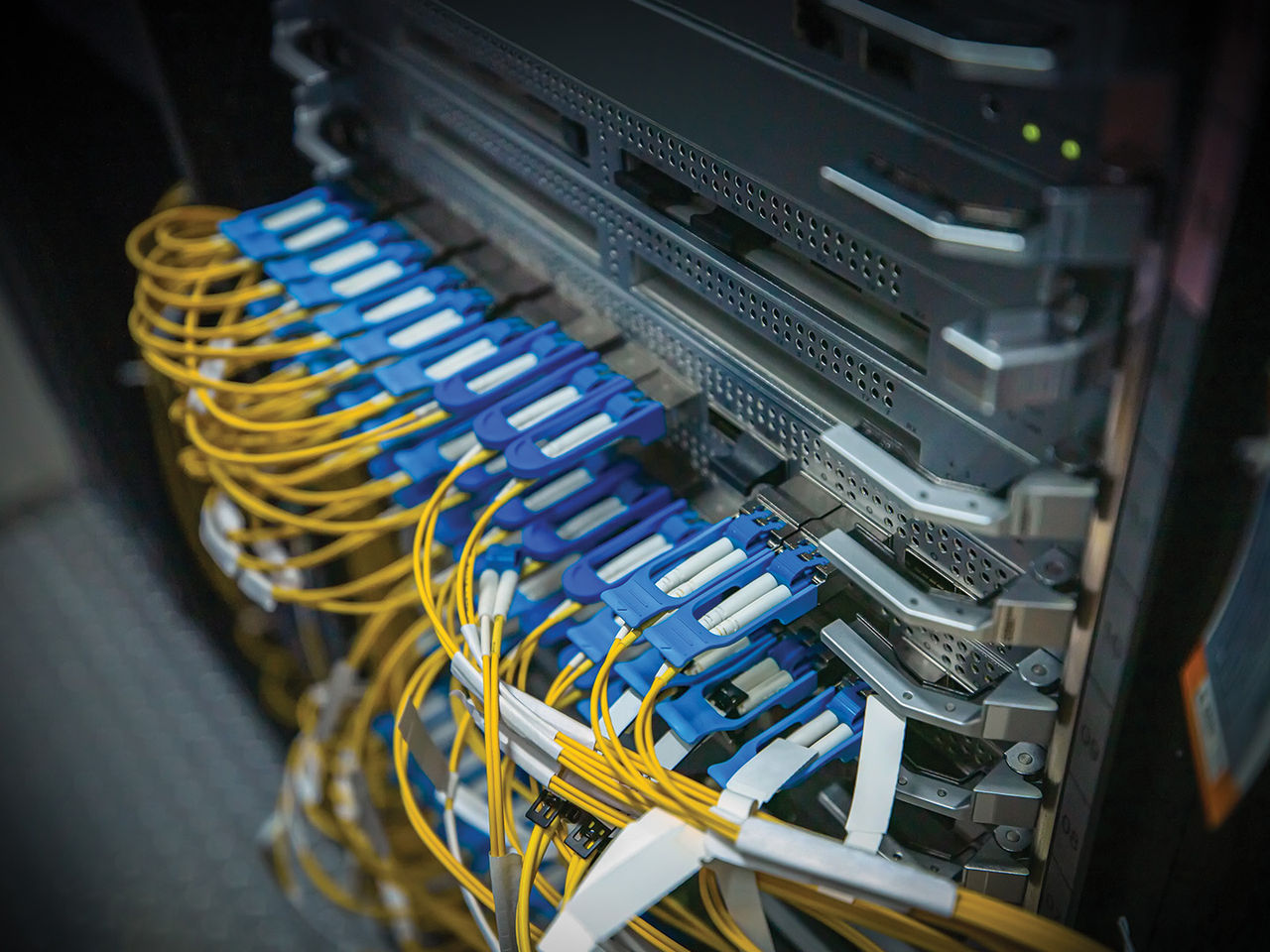
An IT specialist monitoring co-packaged optics (CPO) in a data center.

Co-Packaged Optics for AI Data Centers

Front-panel architectures may soon be overwhelmed with the continued growth in bandwidth, power and thermal demands. As data rates scale to 224G and beyond, co-packaged optics (CPO) and near-ASIC connectivity offer a way forward for data center infrastructure. Molex delivers a clear blueprint for this transition through advanced laser designs, substrate fiber interfaces and system-level engineering to achieve new levels of density, deployment speed and thermal performance.

Why Co-Packaged Optics Matters for AI Infrastructure


As AI fabrics scale to 224G and prepare for next-generation 448G speeds, front-panel pluggables place pressure on high-speed circuit design, signal integrity, power, cooling and faceplate space, making traditional architectures harder to extend. Longer electrical paths across the PCB also create greater signal loss, forcing designers to rely on retimers, complex board stacks and tighter design margins. Shifting to near-ASIC and CPO architectures moves the optical I/O directly adjacent to or onto the substrate, but customers require serviceable architectures that reduce maintenance risk, speed qualification and support faster data center deployment.

To achieve this, next generation architectures need to isolate heat-generating laser sources away from the compute substrate to increase reliability, protect uptime and support field maintenance. Silicon photonics optical interfaces must also support automated wafer-level testing and standard assembly flows to reduce manufacturing risk at scale. By designing at cluster scale across optical, thermal and mechanical packaging domains, engineers can move from CPO concept to practical deployment with greater confidence.

Molex helps make this transition easier to cool, simpler to maintain and faster to deploy at scale. Our OIF-compliant External Laser Small Form Factor Pluggable (ELSFP) interconnect system isolates thermal load from the processor, while detachable fiber packaging and passive self-alignment technologies support lower-cost assembly, better yields and a smoother path from pluggables to CPO. With high-density matrix cabling, High Radix Optical Circuit Switches, fiber shuffles and blind-mate backplane connectors, Molex helps customers reduce total cost of ownership (TCO) and bring AI infrastructure online faster.

Power, Thermal and Operational Efficiency


Bandwidth, Density and Electrical Performance

As AI clusters scale, long electrical paths across legacy PCB architectures make it difficult to preserve signal strength, power efficiency and thermal control. Moving the optical engine onto or directly adjacent to the ASIC substrate shortens the highest-speed electrical link, helping improve insertion loss (IL), optimize return loss (RL), and minimize crosstalk and lane-to-lane skew.

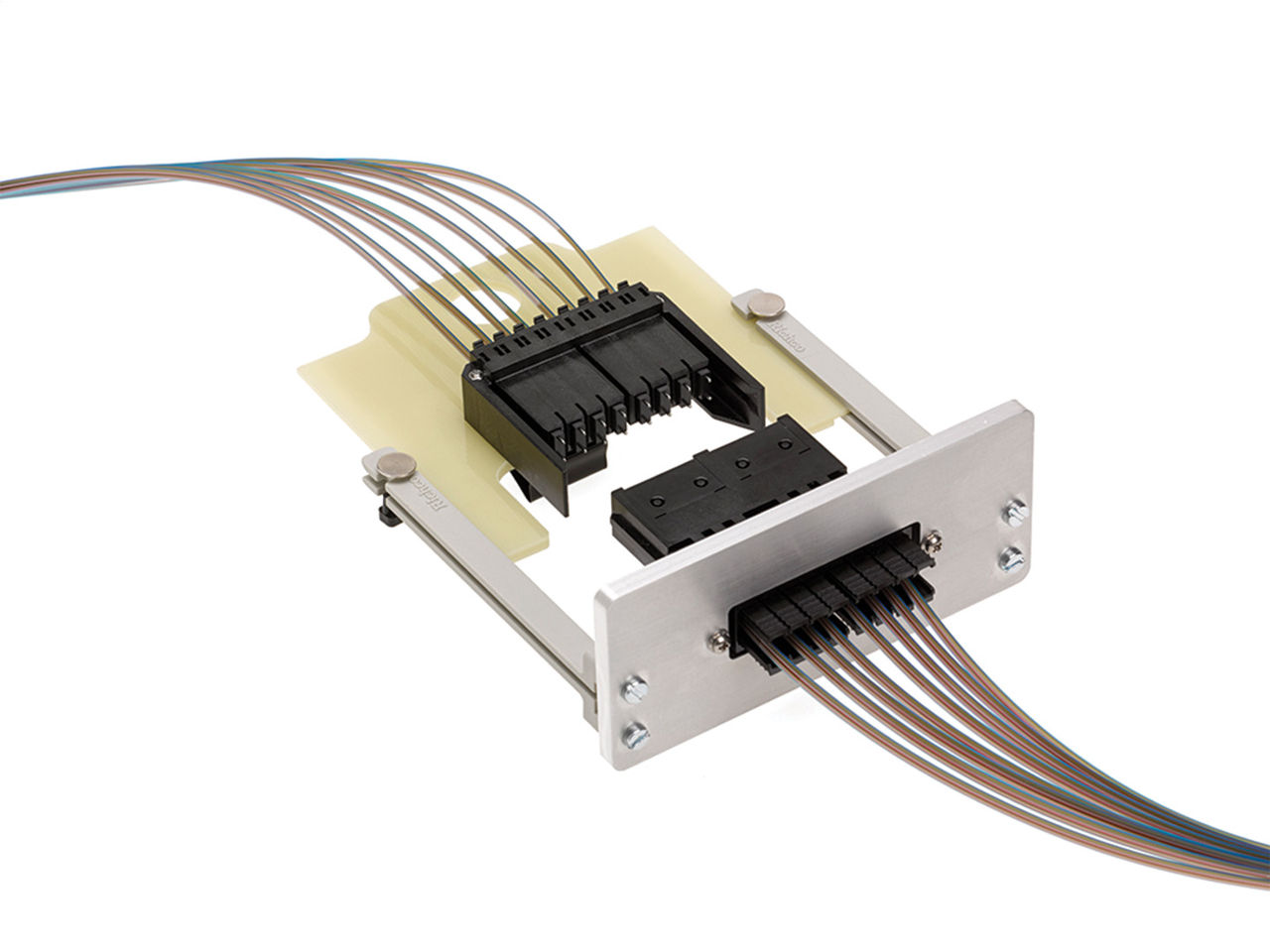
Molex supports this shift with near-package optical interfaces, high-density bypass cabling and specialized co-packaged interconnect toolkits that help data centers move more bandwidth with less electrical strain.

Futuristic server room with glowing blue and purple network waves representing high-speed data transfer, featuring rows of server racks and cables in a dark, high-tech environment.

Minimizing Field Service and Downtime Risks

Uptime depends on keeping the most critical parts of the system serviceable, rather than sealed inside a hard-to-repair switchboard. External laser source architectures keep laser modules pluggable on the front panel and away from the processor’s heat, reducing maintenance risk while increasing system reliability.

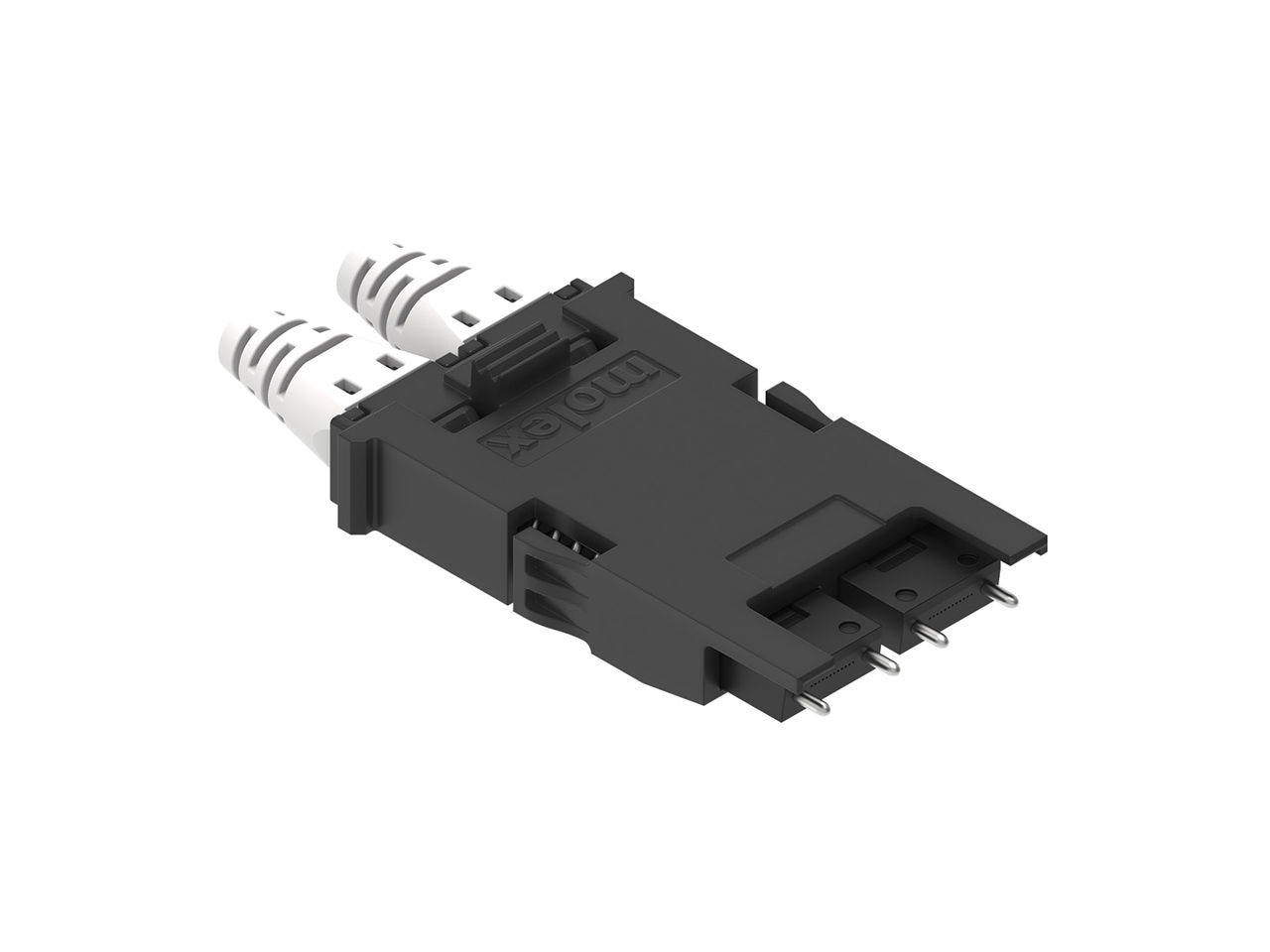
Molex CPO interconnect architectures support this model with blind-mate optical and electrical interfaces and self-aligning detachable fiber coupling that make service and assembly more repeatable at the scale data centers require.

Data center technician discussing co-packaged optics with co-worker.

Cluster-Scale Switching and Routing Integration

Moving data efficiently does not stop at the chip; the optical path must extend across the switch fabric, rack and larger AI cluster. Flatter optical routing reduces switch tiers, limits optical-to-electrical conversions and removes fiber bottlenecks that add cost, clutter and signal risk.

Molex enables this system-level approach with optical interconnects that enable high-density cabling, fiber shuffling and high-density front and blind mating connectivity that help data centers advance AI infrastructure with lower TCO.

Computer network server cabinet with yellow fiber optic cables connected to blue transceivers.

Additional Resources


Blog

Scaling Beyond the Limits of Pluggable Architectures

As hyperscale systems push beyond the practical limits of longer electrical paths, data center architectures need a more efficient way to move bandwidth. Co-packaged optics bring optical I/O closer to the chip, improving bandwidth density and performance-per-watt. Molex makes that shift practical with CPO solutions designed for manufacturable, serviceable and deployment-ready AI infrastructure.

AI data center with sleek technology, glowing servers, and network hardware in a large, modern facility.

Application

Co-Packaged Copper Solutions

Hyperscale environments hit signal integrity walls at 800Gbps and 1.6Tbps, where insertion loss, crosstalk and power inefficiency begin to significantly degrade the signal. Moving the connection off the board and nearer to the ASIC minimizes channel loss. Serviceable co-packaged copper (CPC) from Molex optimizes the path and protects the substrate from the stresses of high-performance connectivity.

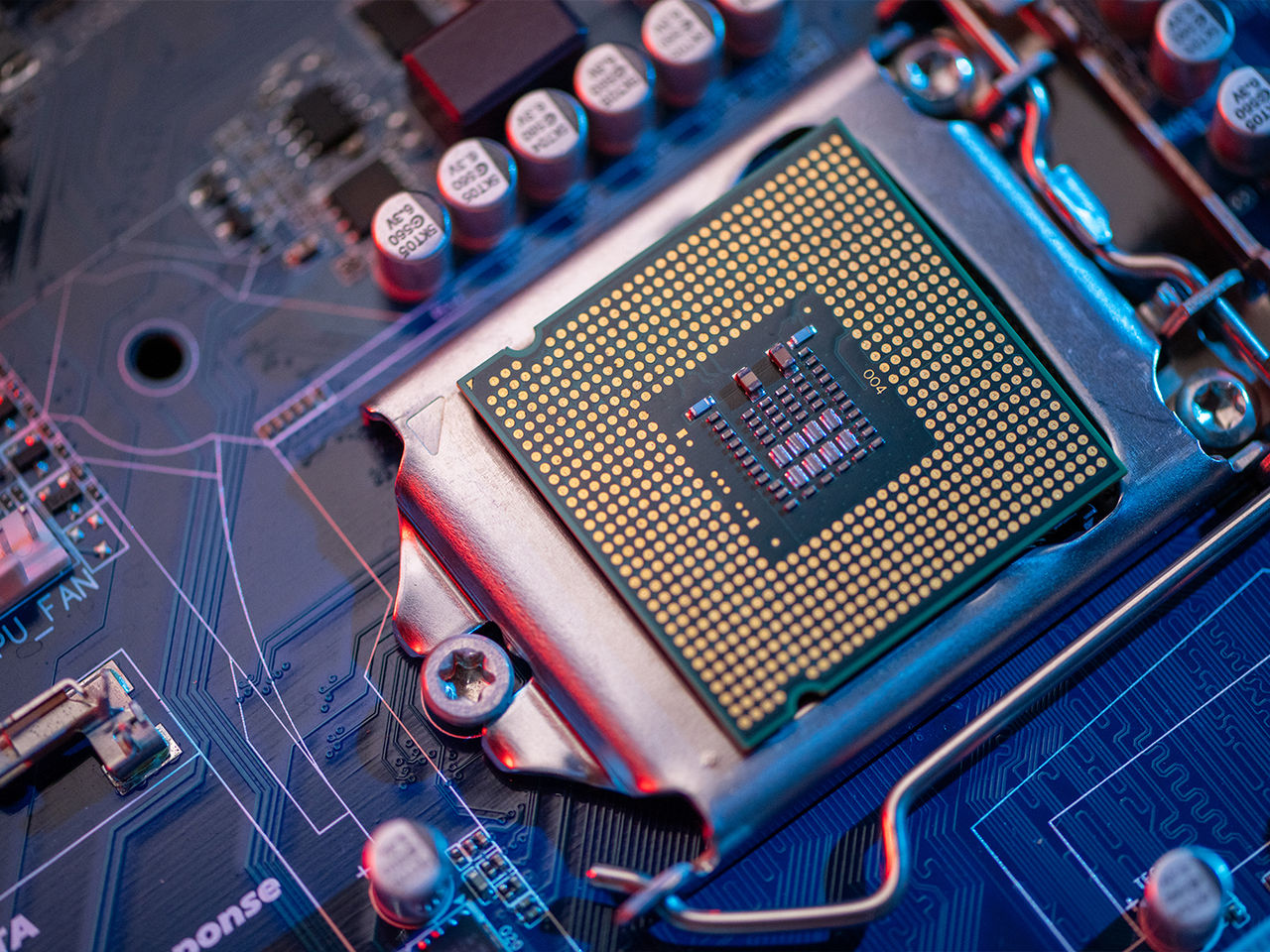
Close-up of a server-grade CPU socket architecture, demonstrating the high-density pin layout required for co-packaged copper interconnects.

Application

Near-ASIC Solutions

When AI and data center platforms push speeds higher, near-ASIC hardware shortens critical paths before bandwidth, power and density limits slow system performance. These designs require electrical, mechanical and thermal tradeoffs to be solved together early in the process. Explore the Molex portfolio of high-speed interconnects that optimize the full channel from the ASIC to the fabric.

IT professional using a laptop in a modern data center with glowing blue server racks.