


| Fiber Count per Port | Fiber Type | Validations |
|---|---|---|
| Up to 12 (MT ferrule) | Polarization maintaining (PM) or singlemode (SM) | OIF, RoHS, REACH, GR 468, GR 1435, GR1217 (6.3.3), TIA-604-5, IEC-61754-7-1 |
Features and Benefits
As data centers face AI-driven demands to increase bandwidth, direct-to-chip optical connections are necessary to maintain signal strength at high data rates. Optical solutions require laser power sources, but heat degrades their reliability; removing the devices from the thermal zone of the high-power system’s integrated circuits improves their dependability. External laser power sources present challenges around power efficiency, serviceability and environmental robustness.
To support CPO solutions that avoid heat effects, data centers need to move optical power sources off the chip. Integrating high-performance optical connections in a compact, durable form factor ensures efficient light energy delivery from the laser to the chip. This simplifies maintenance while streamlining upgrades and offering cost-effective scalability.
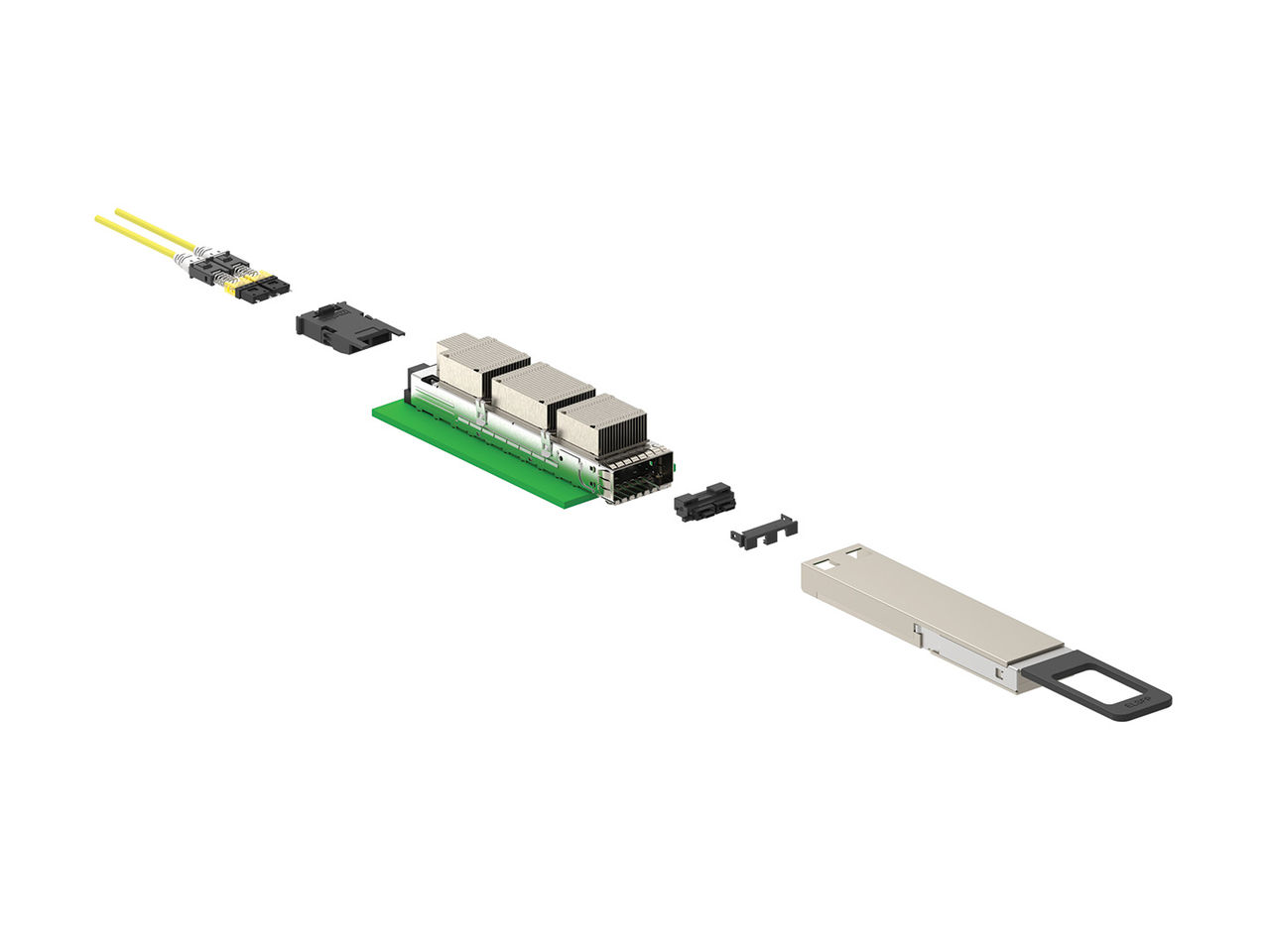
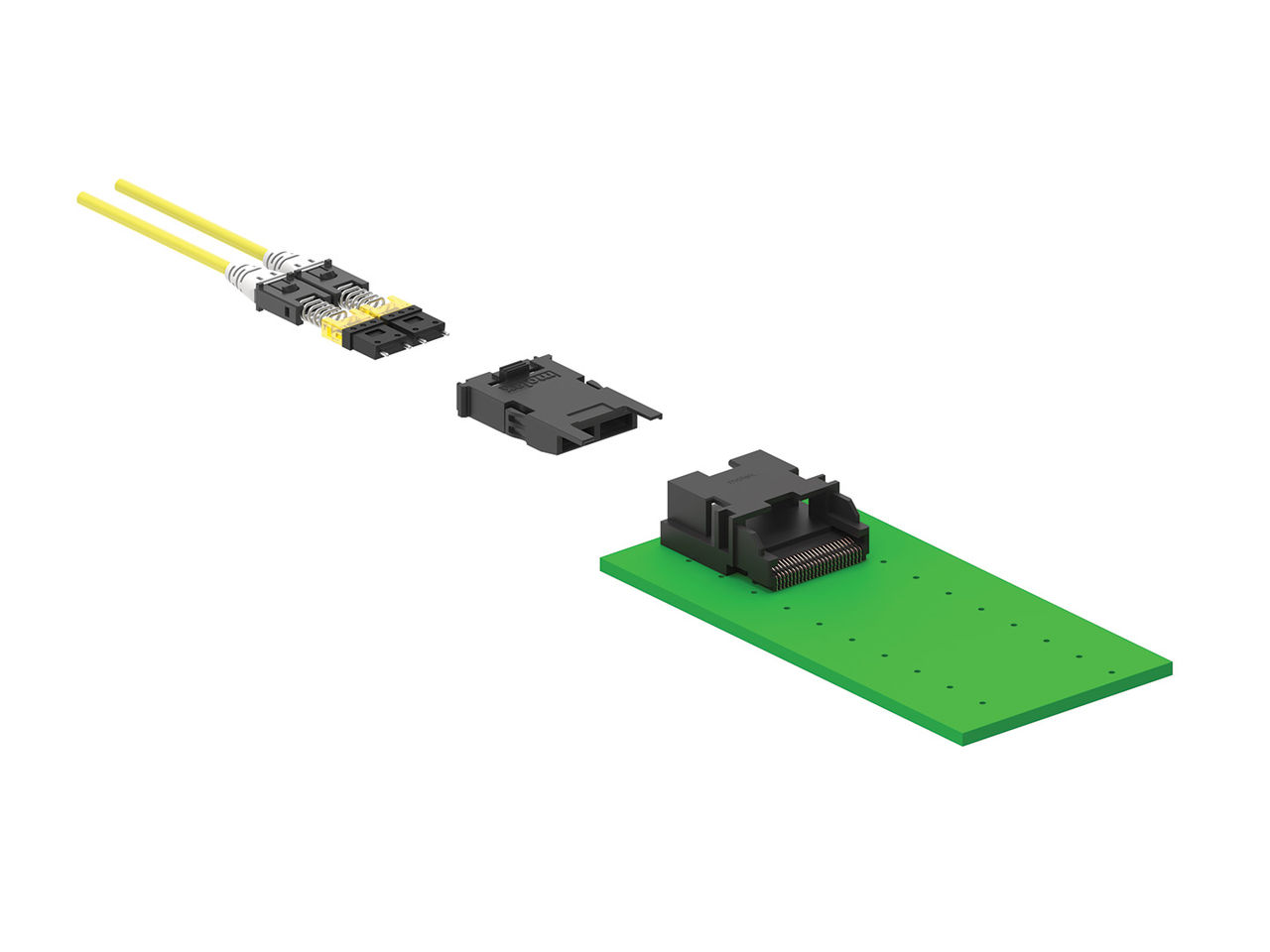
ELSFP Optical Connectors are designed to provide optical power from external laser sources to the chip, streamlining system design and maintenance for hyperscale datacenters. By enabling efficient and reliable CPO connections and moving laser power sources off the chip to avoid thermal effects, the ELSFP system supports high-speed, scalable data transmission for next-generation architectures.
Datasheets and Guides
Applications by Industry

Backend networks
High-density networking systems
Switches

This is not a definitive list of applications for this product. It represents some of the more common uses.
Frequently Asked Questions
What is the External Laser Small Form Factor Pluggable (ELSFP) Optical Connector system?
ELSFP Optical Connectors are pluggable-module direct-to-chip solutions that enable co-packaged optics (CPO) connectivity and support efficient optical power delivery for external laser source (ELS) systems. The durable ELSFP design ensures reliable operation in high-temperature, variable-humidity conditions and provides a crucial component in scalable, serviceable CPO solutions.
What ferrule types are allowed per the OIF ELSFP standard?
The ELSFP system allows the optical connector to contain up to two side-by-side 12-fiber MT ferrules, with each ferrule potentially containing up to 12 fibers, depending on the application system’s needs. Unused fiber ports of the 12-fiber MT ferrule are left empty.
What is the difference between prior ELSIS products and the new ELSFP optical connectors?
The External Laser Source Interconnect System (ELSIS) was an earlier ELS technology released by Molex prior to the establishment of OIF standards. It has a single MT ferrule in the center of the connector. The ELSFP system uses a jointly developed industry-standard ELS interface that defines optical connectors as having two MT ferrules.
What is polarization-maintaining (PM) fiber, and how is it used in the ELSFP connector?
Polarization-maintaining (PM) fiber is a special single-mode fiber that has physical features called stress rods embedded in the glass structure. These stress rods lock the polarization state of light traveling within the fiber core in a specific orientation that is beneficial for passing light from a laser into devices such as silicon photonic integrated-circuit waveguides. These stress rods must be aligned at each end of the cable within the ferrule, and within a rotational tolerance range. Each ferrule in a port can contain up to 12 PM fibers, all of which need precise rotational alignment. ELSFP interfaces rely on PM fibers for optical fiber connections within the CPO system to provide light energy to optical integrated circuits.