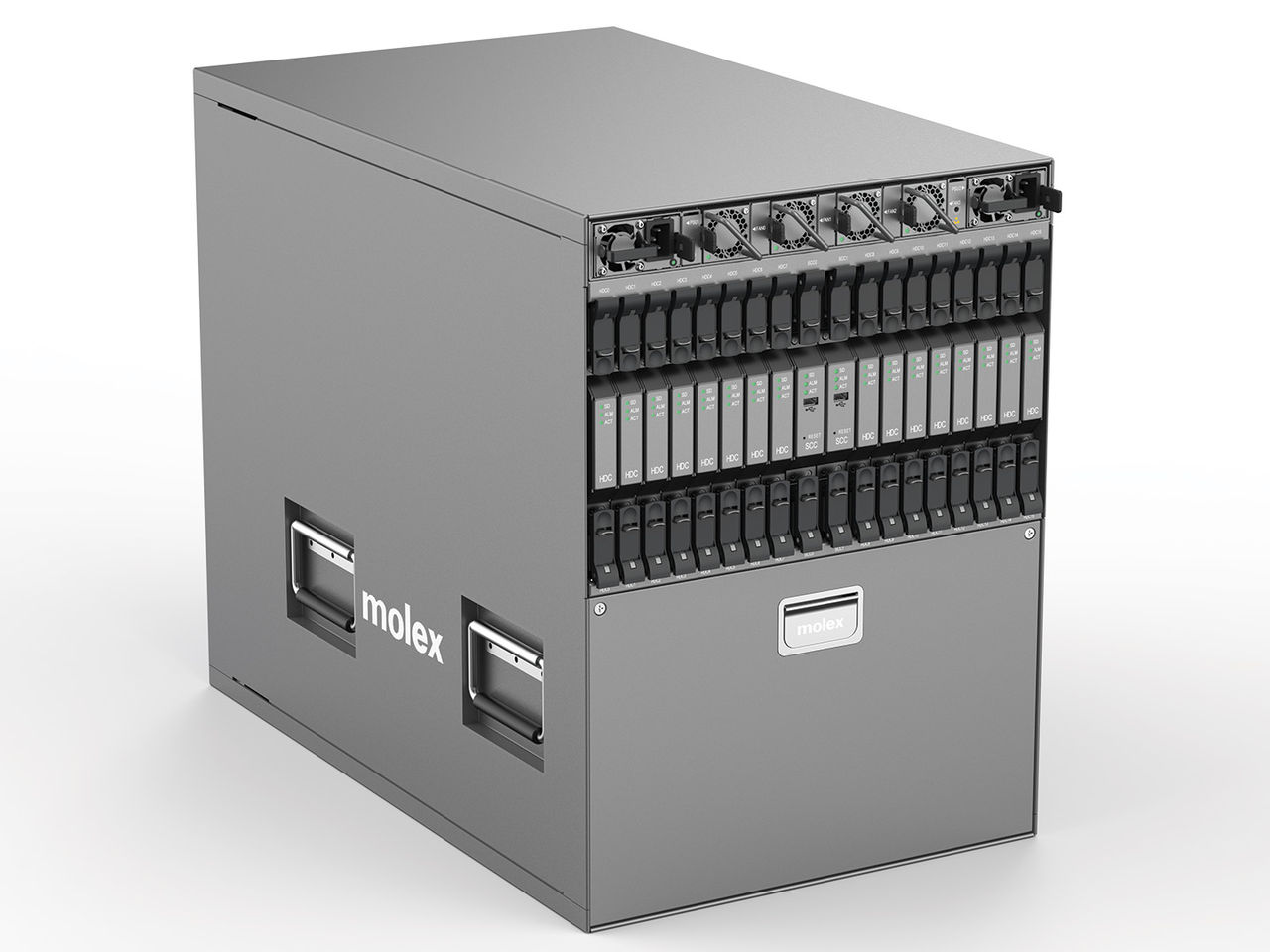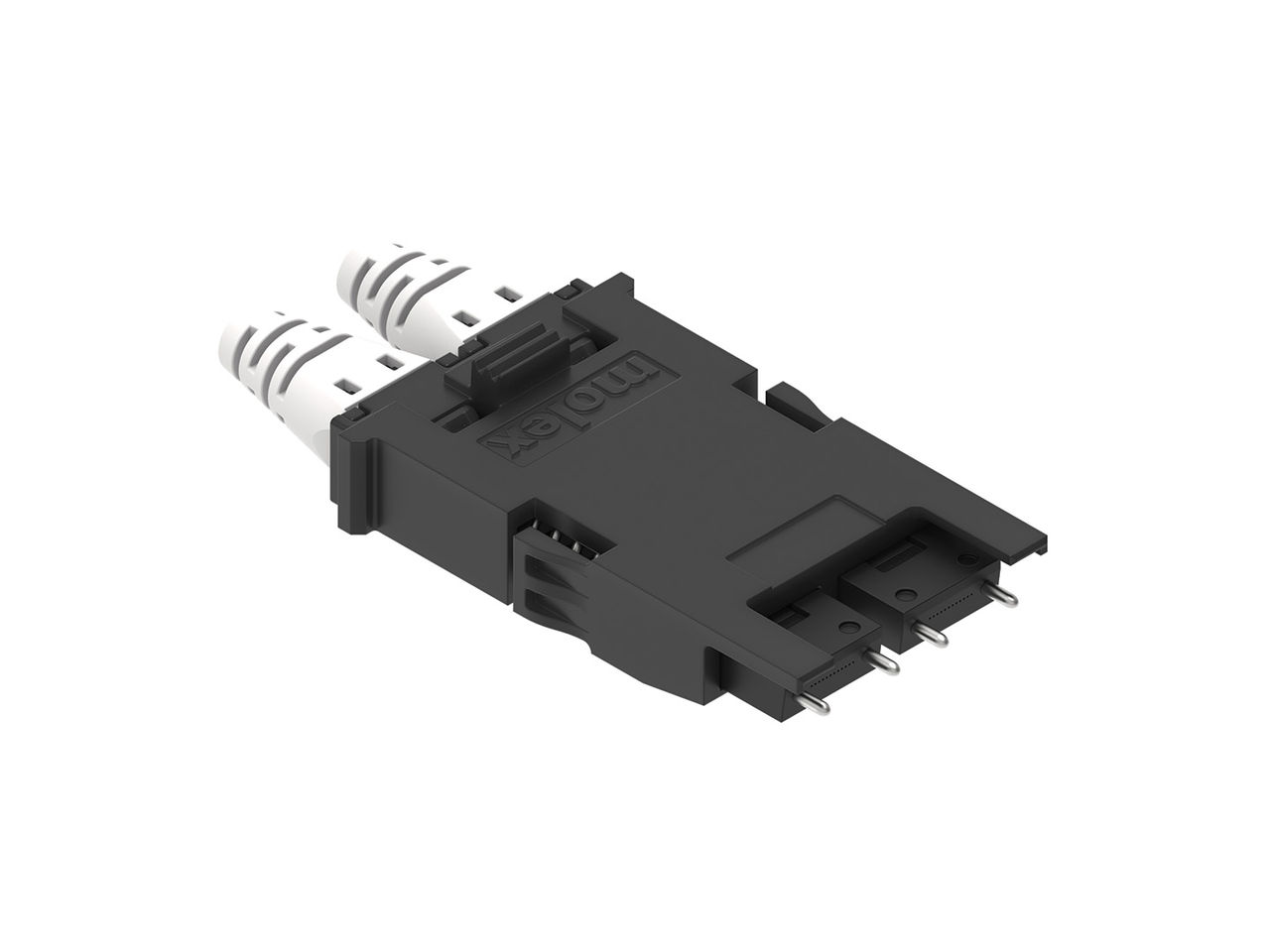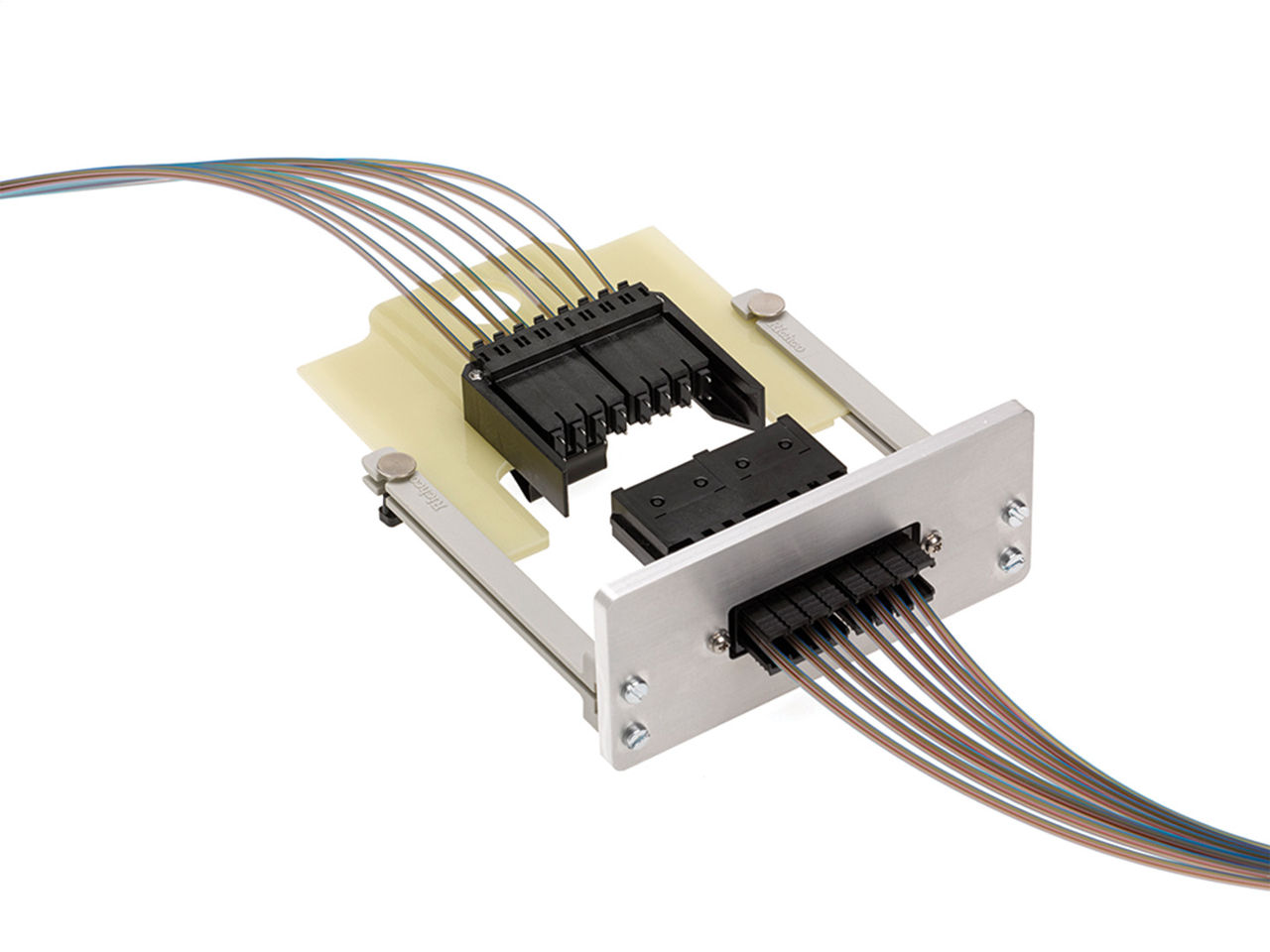
High-radix optical circuit switch platform.

High-Radix Optical Circuit Switch (OCS) Platform

Optical network architects need more efficient connectivity for AI training and inferencing at scale. The High-Radix Optical Circuit Switch Platform from Molex uses micro-electro-mechanical mirrors to establish optical paths between fibers, avoiding optical-electrical-optical conversion. The result is a reconfigurable fabric that reduces complexity and power consumption while supporting software-controlled workload reconfiguration.

Features and Benefits


Optical network architects need scalable east-west bandwidth solutions for AI training and inferencing without continual fabric redesign, while minimizing power and thermal overhead as network speeds and port counts increase. Designs with unnecessary optical-electrical-optical (OEO) conversions often increase costs and complexity, making it difficult to meet tight optical link budgets for longer reaches. Quick reconfigurations for job scheduling, isolation or maintenance without manual recabling or disruptions are also necessary and should be designed for improved availability, serviceability and supply chain readiness for deployment.

Optical circuit switches (OCS) establish direct optical paths using micro-electrical-mechanical system (MEMS) mirrors, avoiding energy-inefficient OEO conversions and reducing power and thermal overhead along the data path. Using software-controlled connections, OCS can be quickly reconfigured to adapt fabrics to changing traffic patterns and job schedules without manual recabling. In high-availability environments, portioning control across multiple drivers helps limit the impact of component events and supports serviceability at scale.

The High-Radix OCS Platform from Molex supports up to 544x544 ports with a roadmap to support 1,000+ ports, enabling fewer switch tiers and hops with software-reconfigurable connectivity as workloads evolve. Low insertion loss extends optical reach with fewer amplifiers and regenerators, simplifying optical power budgeting. With improved serviceability and a reduced blast radius, sixteen hot-swappable MEMS driver cards help limit impact during on-site field service, reducing downtime. A SONiC-based OCS Network Operating System helps operators integrate management tools and automatically recalibrate mirrors, saving time and costs. With proven high-volume manufacturing processes and a robust global supply chain capability for mass deployments, the Molex OCS platform is an ideal solution for optical network architects.

Fewer Switching Tiers for East-West AI Traffic

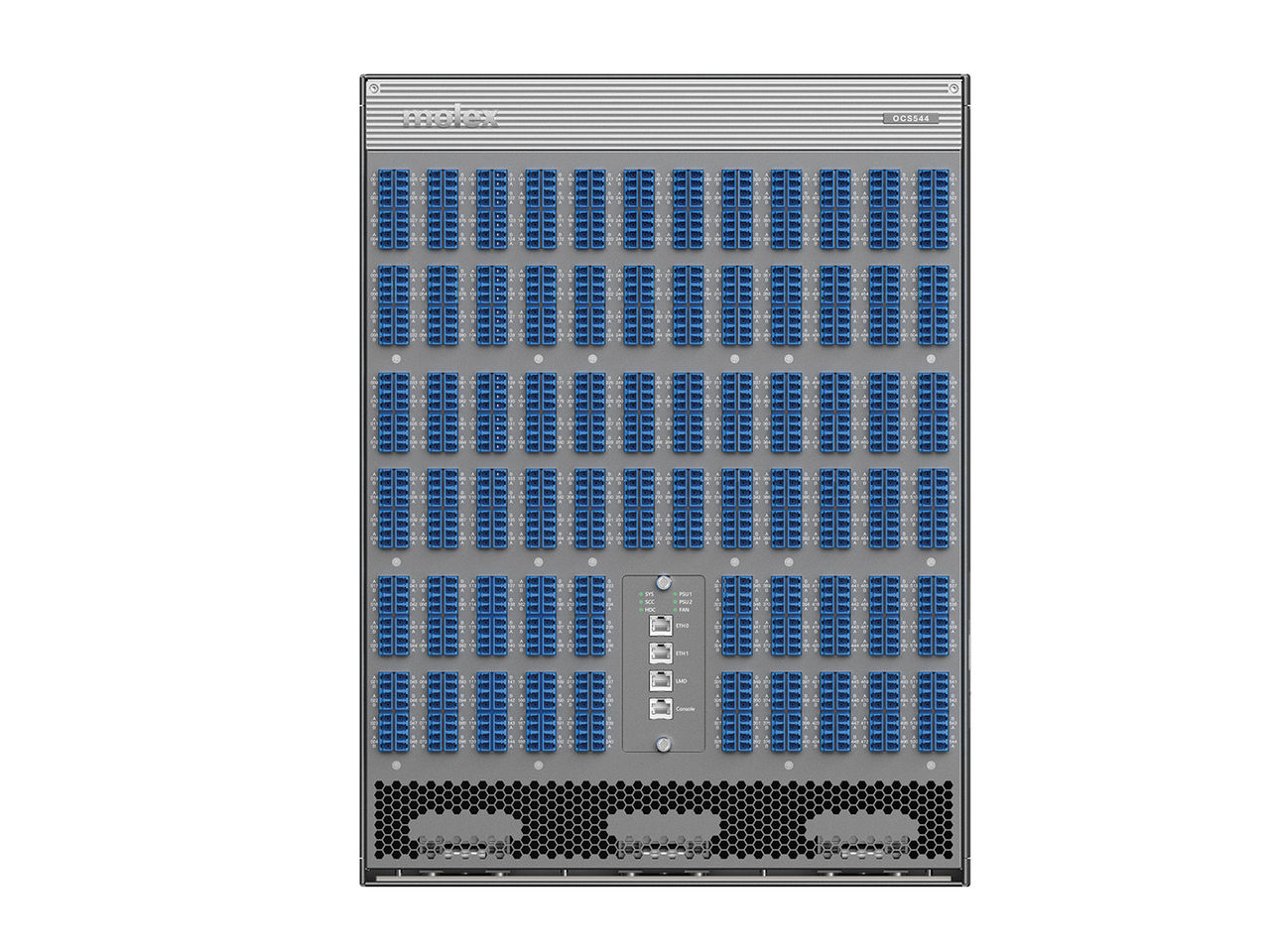
The Molex High-Radix OCS Platform supports up to 544x544 ports, with a roadmap to support up to 1,000+ ports. This high port density enables flatter, higher bandwidth fabrics for large GPU clusters, reducing the number of switch tiers.

High-radix optical circuit switch supporting up to 544 x 544 ports.

Simplified Optical Power Budgeting for Large-Scale Pods

The OCS design features low insertion loss and minimizes signal attenuation, helping meet tight optical link budgets for longer reaches. More operational headroom means networks can achieve reach targets with fewer amplifiers and regenerators, reducing cost, complexity and potential failure points.

Computer network server cabinet with yellow fiber optic cables connected to blue transceivers.

Reduced Availability, Serviceability and Deployment Risks

With proven manufacturing processes (20 years of MEMS expertise in optical communication and 2 million MEMS devices deployed), Molex delivers high-volume manufacturing and global supply chain capability for mass deployments. The platform is designed for serviceability, helping limit the impact of component events and speed on-site maintenance. Available fiber and copper connectivity, shelf and power solutions, and integration services further streamline procurement and system integration.

Optical Circuit Switch platform designed for serviceability for mass deployments.

Enables fewer switching tiers with High-radix, scalable roadmap
Supports up to 544x544 ports with a development roadmap to support 1,000+ ports.

Simplifies optical power budgeting
Low insertion loss enables longer reach with fewer amplifiers and regenerators.

Improves serviceability and reduces blast radius
Sixteen hot-swappable MEMS driver cards help limit impacts of on-site field service and decrease downtime.

Streamlines operational integration
A SONiC-based OCS Network Operating System helps operators integrate management tools and automatically recalibrate mirrors.

Applications by Industry


This is not a definitive list of applications for this product. It represents some of the more common uses.

Frequently Asked Questions


What is an optical circuit switch?

Optical circuit switches (OCS) establish direct optical paths using micro-electrical-mechanical system (MEMS) mirrors, avoiding energy-inefficient optical-electrical-optical (OEO) conversions and reducing power and thermal overhead along the data path.

What makes an optical circuit switch high-radix?

A high-radix OCS platform is an optical circuit switch designed with a very large number of ports—typically 300x300 or larger. The Molex High-Radix OCS platform supports up to 544x544 ports, with a roadmap to support 1,000+ ports.

Is the Molex optical circuit switch (OCS) platform an off-the-shelf product?

The OCS platform from Molex is not an off-the-shelf product. It is a scalable platform that can be tailored to specific network requirements. Molex engineering teams collaborate with architects to customize the right solution for specific applications.

How is the Molex High-Radix Optical Circuit Switch (OCS) Platform different from competing start-up platforms?

Molex combines industry-leading port density, a low-loss design, mature process reliability, and the manufacturing scale to supply large-scale deployments.

Does Molex provide orchestration software?

Molex does not provide orchestration software, but the OCS platform supports software control and integration into existing orchestration stacks including SONiC and other alternative platforms. Molex engineering teams work with architects to implement their preferred software control plan.