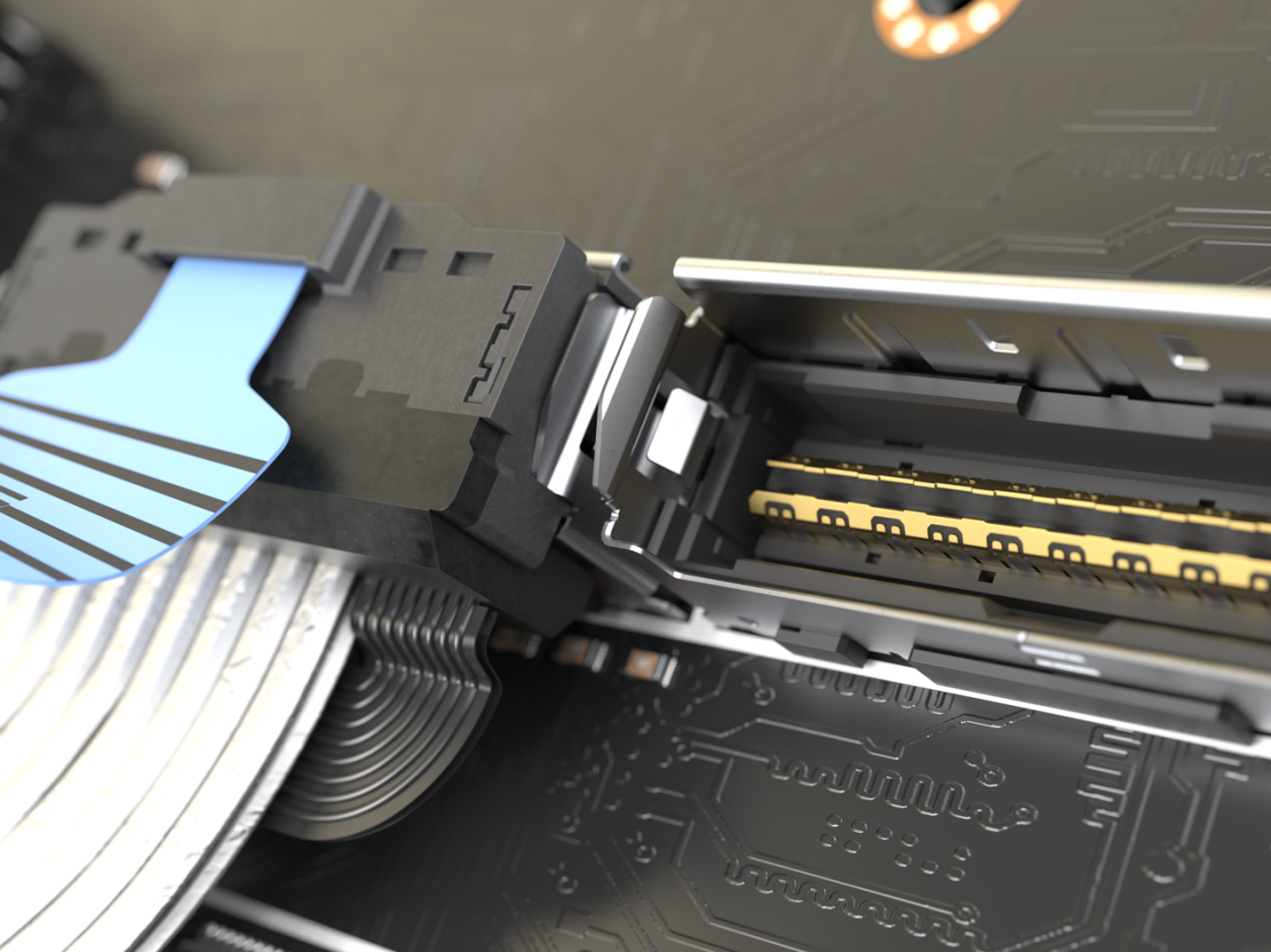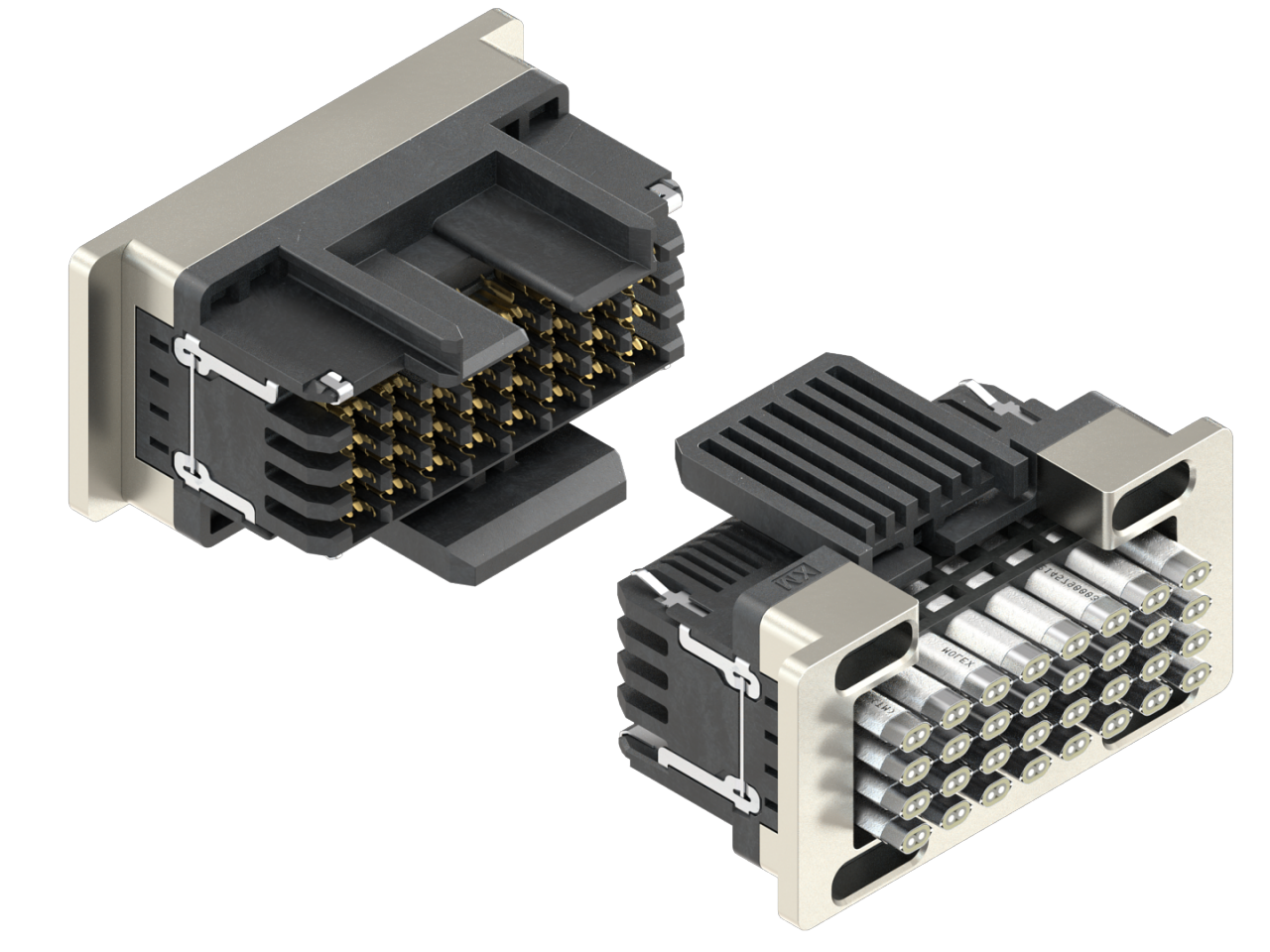
Modern AI compute trays rely on high-speed PCIe links to connect a growing number of processors and accelerators. As PCIe generations advance to higher data rates, with PAM-4 signaling in newer generations increasing sensitivity to channel loss and crosstalk, maintaining signal integrity across longer electrical channels becomes more difficult. Routing these within the tray is constrained by dense compute and cooling hardware, limiting available space around high-power processors and I/O interfaces. Higher compute performance also drives greater connector density within limited front-panel and backplane space, complicating connector placement and routing.
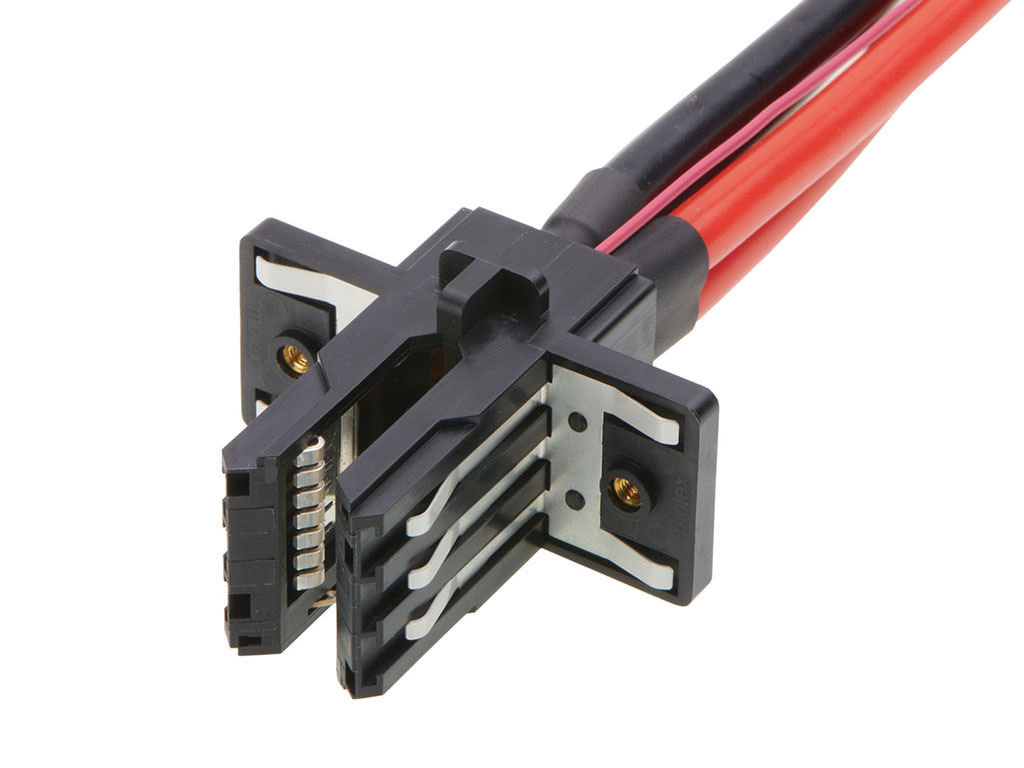
Passive and active cable assemblies support longer electrical channels through low-loss cabling, with active designs adding integrated signal conditioning when additional reach is required. High-speed pluggable I/O solutions enable dense front-panel interfaces across varying bandwidth and reach requirements while maintaining serviceability. Low-resistance power connectors support efficient power distribution, with hybrid power-and-signal connectors carrying power and sideband signals through an integrated interface.
Molex addresses next-generation PCIe connectivity challenges through high-performance interconnects that maintain signal integrity while leveraging low-profile, angled-exit architectures to maximize routing flexibility within dense tray layouts. With a broad portfolio of internal cabled connectivity, high-speed I/O, backplane and power solutions, Molex enables engineers to balance electrical, mechanical and thermal requirements across the tray while supporting scalable system architectures.