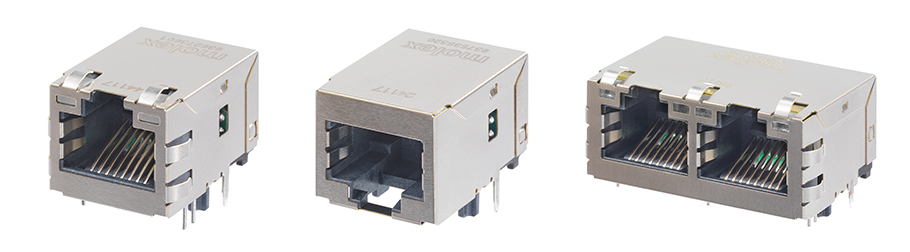

The next time you’re sitting at home, take a look around. Chances are, many of the items you use in your everyday life, from computers, printers and cellphones to refrigerators, thermostats and even lightbulbs, are interconnected through built-in internet connectivity. This network of devices, commonly referred to as the internet of things (IoT), allows for the automatic sending and receiving of data. If your devices are connected directly to the internet, they most likely utilize RJ45 connectors and ports.
Registered Jack (RJ) products have come a long way since the 1970s, when they were used primarily for connecting to telephone networks. As technology advanced, RJ45s took on the task of transmitting data. As demand grew for greater data transfers at faster speeds, RJ45 products needed to change to remain relevant in the industry. This led to the creation of magnetic connectors and ports, which include internal magnets to help filter signals and allow for higher speeds.